





Company dynamics



News details
2026-06-11
Over the past two years, many entrepreneurs have shared a genuine sentiment: business operations continue, yet growth is no longer as effortless as it used to be. Opportunities still exist, but judging which ones to seize has grown increasingly difficult. In the past, an enterprise could achieve rapid growth simply by offering quality products, competitive pricing and extensive distribution channels. Today, however, companies are no longer engaged in market competition of a single dimension, but in far more complex systemic competition. The global supply chain is undergoing restructuring, and international trade rules are evolving. For businesses, going global has shifted from an optional growth strategy to a strategic necessity. Meanwhile, AI is no longer just a buzzword; it is reshaping corporate efficiency, organizational structures, product lines and business models. Over the next decade, two questions will likely separate successful enterprises from the rest:
First, can the business go global?
Second, can the business leverage AI to deliver tangible growth?
These are the core topics to be discussed at the July seminar of the Visiting Scholar and Postdoctoral Research Program at Harvard University.
### 1. Going Global Is Not a Slogan, but a New Survival Scope for Enterprises
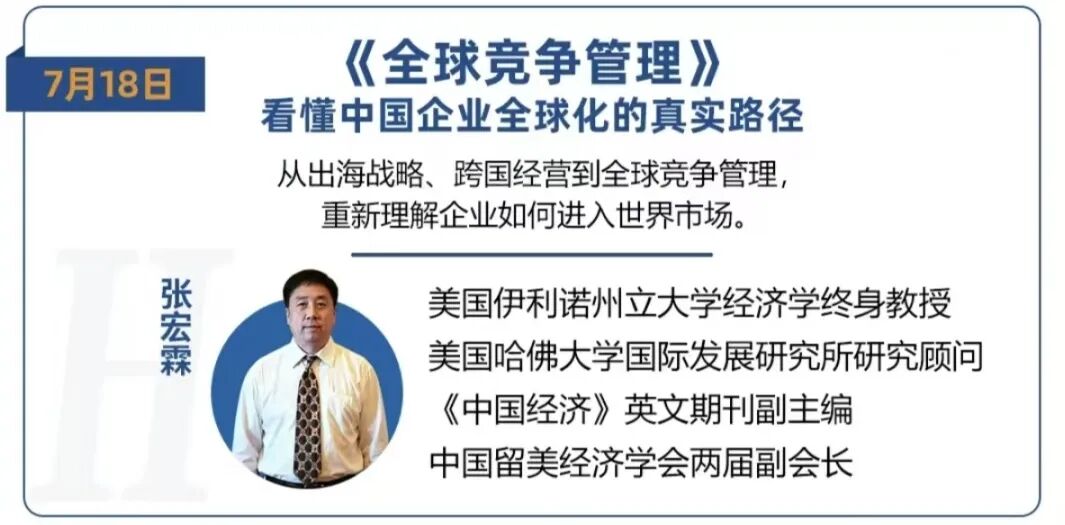
Professor Zhang Honglin is a tenured professor of Economics at Illinois State University and a research consultant at the Harvard University Kennedy School's Ash Center for Democratic Governance and Innovation. He has long dedicated himself to research on China's economy, international development and global competition. The value of this seminar lies not in simply telling enterprises to "go global", but in helping entrepreneurs truly understand how Chinese enterprises can reposition themselves, identify risks and build international competitiveness amid the new global order.
Many enterprises still view going global merely as "selling products overseas". In fact, genuine global expansion is far more complex. Today's overseas markets involve not only orders and sales channels, but also legal compliance, geopolitical risks, supply chain layout, local team management, cross-cultural governance, brand credibility and capital regulations. In the past, companies ventured overseas just to gain an extra market; nowadays, going global means securing a new future for the business. Regrettably, many Chinese enterprises fail not because of inferior products, but due to inadequate capabilities in global competition management. Unable to assess market risks, unfamiliar with local regulations, hampered by backward organizational structures and struggling to establish local brand influence, they end up expanding overseas yet failing to gain a firm foothold.
On July 18th, Professor Zhang Honglin will preside over the seminar: *Enterprise Global Expansion and Strategic Breakthrough in the New Global Order*
### 2. The Biggest Opportunity for AI Lies in Commercialization, Not Concepts
Nearly all enterprises are talking about AI nowadays. However, what entrepreneurs should ask most is not "how powerful AI is", but whether AI can actually generate profits for businesses. A great many AI projects seem to be thriving, with endless financing rounds, press conferences, new concepts, models and tools emerging one after another. Yet once they step into the commercialization phase, the market will turn extremely rational.
Can AI boost efficiency?
Can it cut costs?
Can it generate revenue?
Can it be integrated into corporate workflows?
Can it transform technological advantages into a complete commercial loop?
These are the core questions. The truly valuable AI in the future will not remain merely on presentation slides, but will be applied in industrial scenarios, organizational workflows, customer services and corporate decision-making systems. The next phase of AI competition is no longer about who is better at spinning stories, but who is more capable of creating profits.
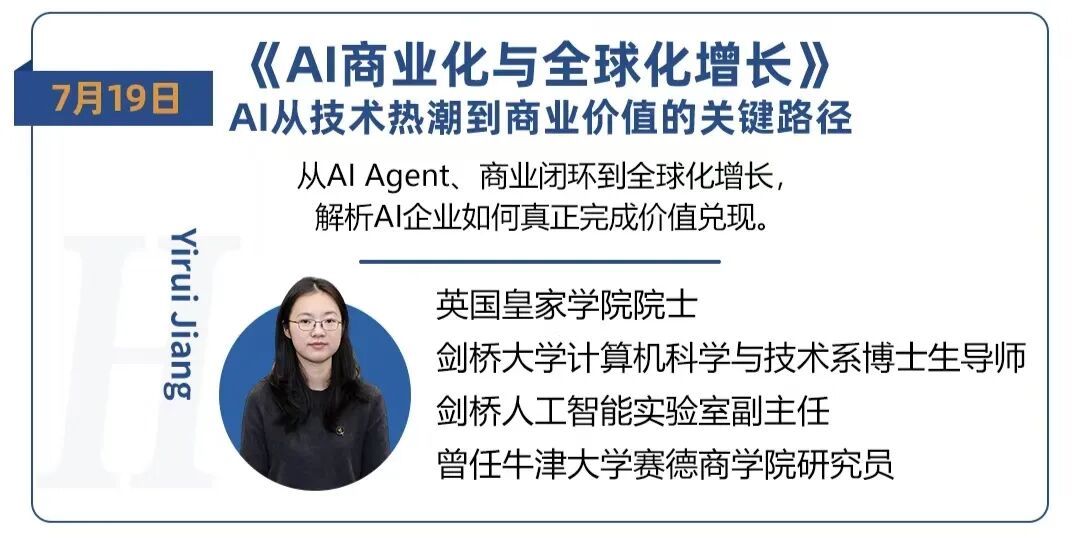
On July 19th, Dr. Yirui Jiang will host the session: *AI Commercialization and Global Growth*
### 3. Why is this seminar so exceptional?
Because this is not an ordinary seminar. It addresses two topics that entrepreneurs care about most and feel most anxious about at present:
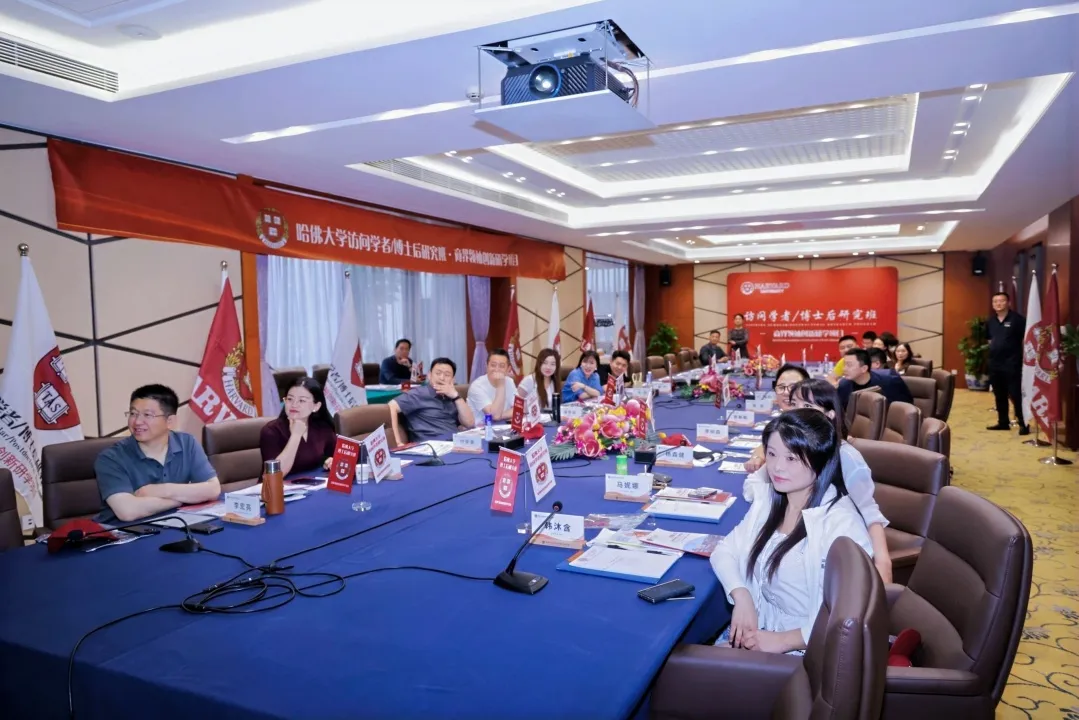
One is how enterprises enter the global market.
One is how AI can truly generate commercial value.
The former defines the spatial boundaries of an enterprise,
while the latter sets its efficiency boundaries.
If enterprises fail to expand into larger markets, they will be trapped in stock competition. If enterprises cannot grasp the commercialization of AI, they may be eliminated by the new efficiency system. These are not problems of the future, but real challenges unfolding right now.
### 4. The True Value of the Visiting Scholar and Postdoctoral Research Program at Harvard University
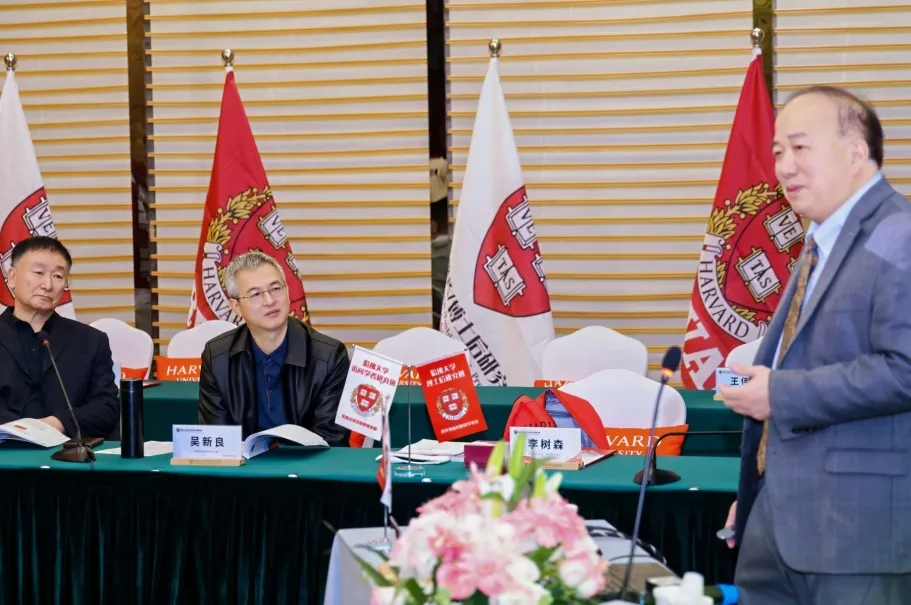
The Postdoctoral Research Program for Visiting Scholars at Harvard University is open to entrepreneurs, chairpersons, investors, senior executives and industry leaders. This program is not merely about attending lectures. Through ongoing high-end domestic seminars and academic exchanges at Harvard, it helps participants build a global vision, enhance strategic judgment, deepen industrial insight and expand high-end social networks. Learning here is not just about acquiring more concepts, but about making sound judgments at critical moments. What truly creates gaps between enterprises is often not information, but cognitive frameworks.
The July Seminar of the Postdoctoral Research Program for Visiting Scholars at Harvard University will be held in Beijing on July 18th and 19th.
An in-depth seminar on enterprises' breakthrough amid globalization
A cutting-edge dialogue on the commercial growth of AI
A cognitive upgrade for entrepreneurs geared towards the next decade
As globalization evolves into a new order and AI enters a critical stage of commercialization, entrepreneurs have to rethink one question: What will drive the growth of my enterprise in the future?
Phone:13811959591
Landline:010-53346777
Mailbox:guoyuping@vip.163.com
Address:Unit 236, 2nd Floor, Block C, Dongsheng Mansion, No. 8 Zhongguancun East Road, Haidian District, Beijing, China
Phone:13811959591
Landline:010-53346777
Mailbox:guoyuping@vip.163.com
Address:Unit 236, 2nd Floor, Block C, Dongsheng Mansion, No. 8 Zhongguancun East Road, Haidian District, Beijing, China